- Main deity
- Mata Trishala
Digambar Jain Atishay Kshetra · Gwalior
त्रिशला गिरि जैन तीर्थ
Trishla Giri
The world’s only temple devoted to a monumental reclining rock-cut image of Mata Trishala — mother of Bhagwan Mahavira — on the historic Gopachal cliffs near Urvai Gate.
- Murti
- Reclining rock-cut image
- Darshan
- 6:00 AM – 7:00 PM
- Place
- Urvai Gate, Gwalior Fort
Atishay Kshetra
A maternal shrine among Tirthankaras
Trishla Giri (also written Trishalagiri, Trishlagiri, or Trishala Mata Mandir) is a living Digambar Jain pilgrimage on the south-west group of the Gopachal rock-cut monuments. The name giri means hill; search engines sometimes garble it as “Trishla Girl.”
Most Jain caves around Gwalior Fort celebrate colossal Tirthankaras in standing kayotsarga or seated padmasana. Trishla Giri is different. Its heart is a rare, large reclining image of Mata Trishala, the Licchavi princess who became the mother of the twenty-fourth Tirthankara, Bhagwan Mahavira. Pilgrimage literature describes the murti as about twelve feet; some older art-historical notes record a figure of about eight feet. Either way, a monumental sleeping mother carved from living sandstone is exceptional in Jain sacred art.
Devotees regard the cave as an Atishay Kshetra — a place of special grace — especially for family welfare, children’s health, and the quiet strength of right conduct. The surrounding cliffs carry reliefs of Mahavira’s Panch Kalyanak, so the maternal image is not an isolated curiosity: it is the opening scene of a rock-cut life of the Jina.
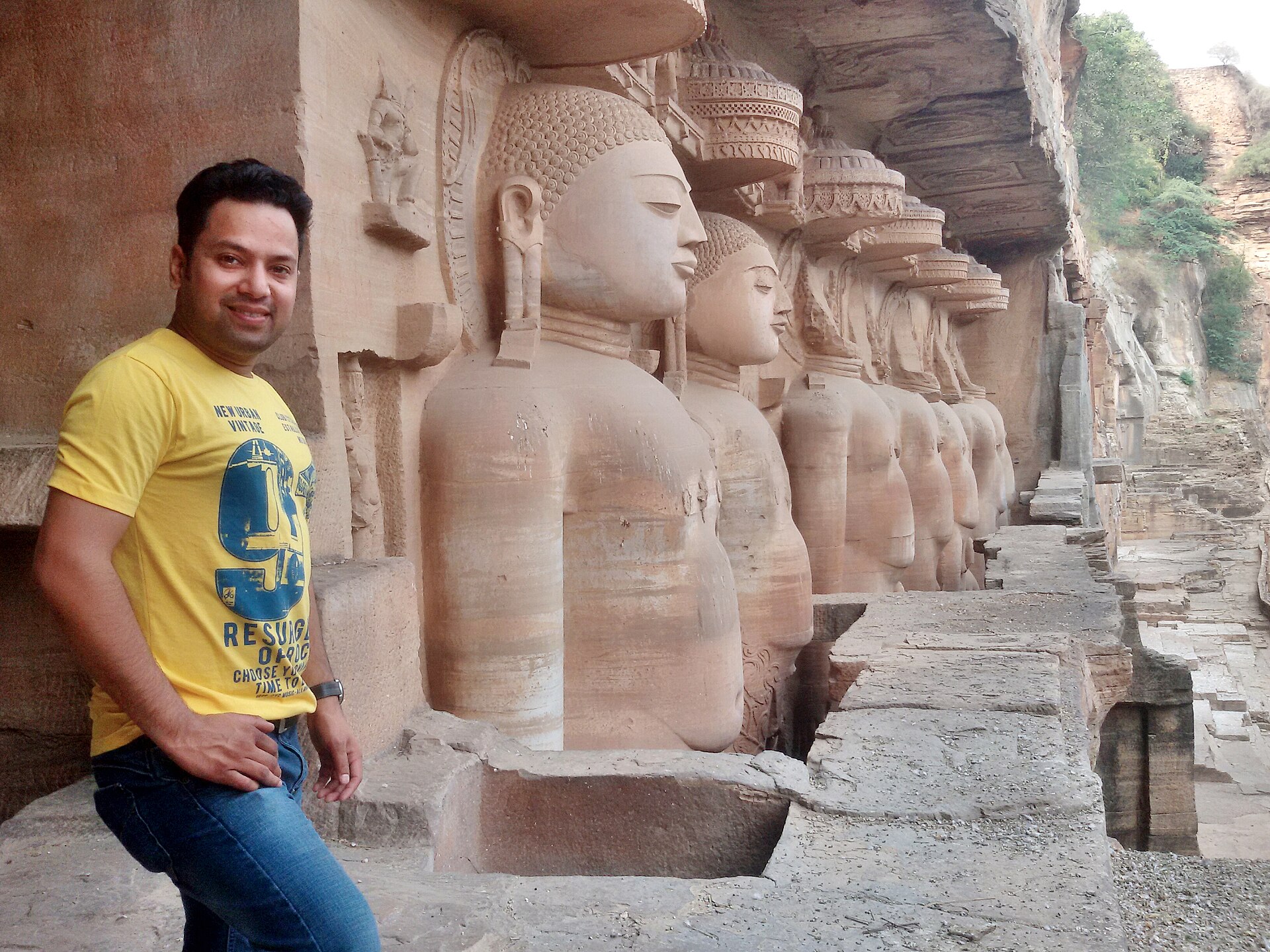
Begin here
Plan a calm day on the hill
The idol & Panch Kalyanak
What to look for in the reclining Mata Trishala murti, attendants, and the five auspicious events of Mahavira’s life carved nearby.
आहारशाला
Pure vegetarian Jain meals on the kshetra. Visitor notes mention a free bhojanalaya; groups should request meals in advance.
Urvai Gate & Gopachal
How the south-west cluster relates to the Urvahi colossi, Tomar-era inscriptions, and the rest of Gwalior Fort.